GALAXY YACHT
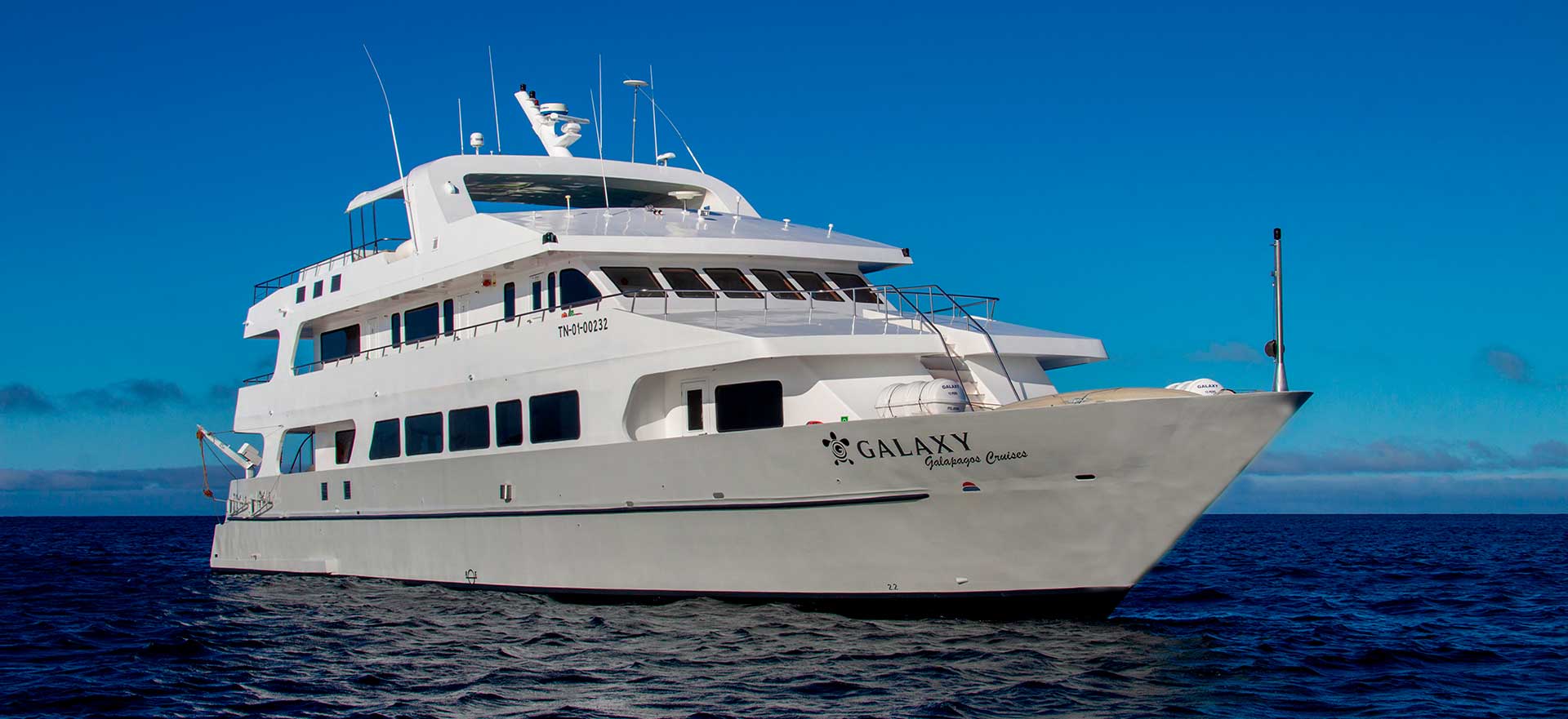
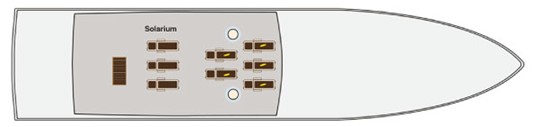
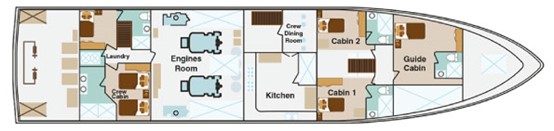
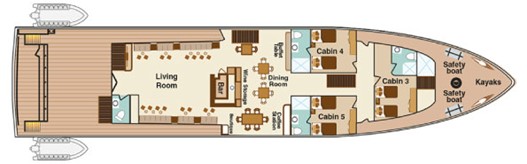
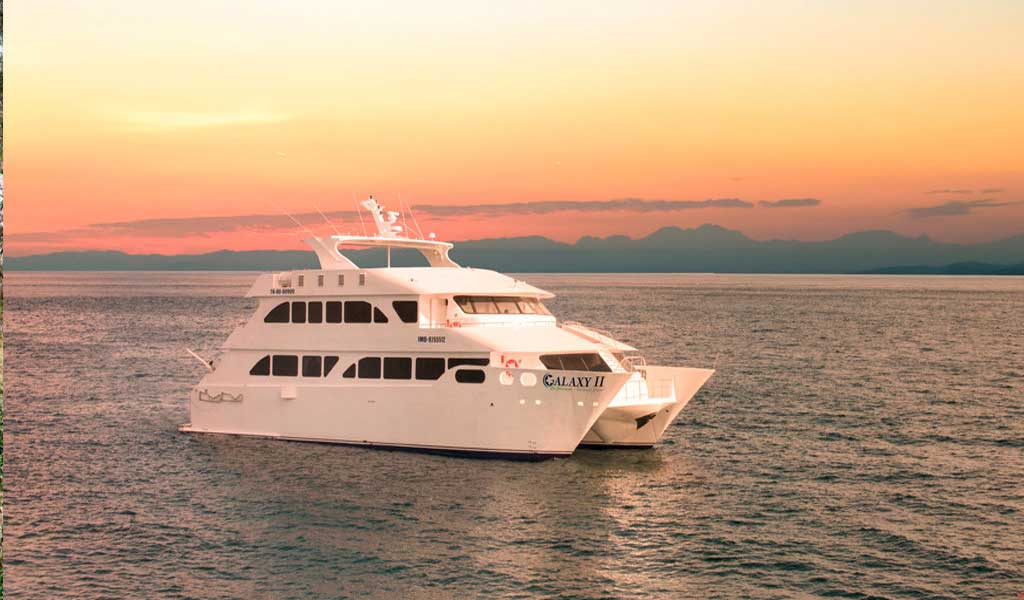
Galaxy Galapagos Yacht is a well-designed vessel for your holiday’s enjoyment, with complete days of exploration and adventure in an oasis of peace, tranquility and beauty. This cruise offers spacious cabins with facilities, comfortable social areas on the sundeck for enjoying the landscapes offered by the “Enchanted Islands”. Inside the yacht has spacious and cozy social areas allowing you to relax after a hard day of exploring on the Islands.
TECHNICAL SPECIFICATIONS |
|
ACCOMMODATION |
|
5 Days – Southern Route
Day 1
SAN CRISTOBAL AIRPORT
Departure to the Galapagos Islands, arrival at San Cristobal airport, where our naturalist guide of the National Park will be waiting for you.
LOBOS ISLAND
Lobos island is a small islet separated from San Cristobal by a narrow channel, forming a sheltered bay where sea lion pups play in tidal pools. Despite its small size, the island is surprisingly packed with wildlife, especially with “lobos marinos”, the Spanish name for sea lions. Groups of sea lions will welcome you at the landing spot, but as you walk a few steps inland, male frigatebirds displaying their inflated red balloons will be perched on the bushes and trees. A small colony of blue footed boobies, which often nest right on the trail, will give you the opportunity to observe their famous courtship dance.
Day 2
GARDNER BAY
Gardner beach is undoubtedly one of the most beautiful and interesting beaches to visit in the Galapagos. Its fine coral sand and turquoise water give it a totally tropical appearance, which contrasts with the presence of sea lions basking in the beach. You will have the opportunity to walk along the beach and learn about the biology of sea lions and other endemic species, such as the Española mockingbird, marine iguanas and Galapagos hawks.
SUAREZ POINT
This rocky trail is one the most amazing nature walks you can do in the Galapagos islands.
From the moment you set foot on the island and all the way along the trail the amount and diversity of fauna is truly amazing. Sea lions and marine iguanas will be the first ones welcoming us, followed by large colonies of sea birds, including Nazca and Blue-footed boobies, gulls and tropicbirds. At the end of the trail we will visit a colony of waved albatross (April to January), the largest bird in the islands and one of the most interesting because of its powerful flight and elaborate courtship. Waved albatross only nest at Española, so this is the only place where you will see them at close range.
Day 3
POST OFFICE BAY
Floreana is famous for the tales of German settlers and the baroness during the late 1920’s and 30 ‘s. Assassinations, disappearances and other unsolved mysteries are the ingredients of this fascinating story.
Post office bay was often used by whalers to anchor their ships and go up to the highlands to get freshwater and tortoises. Most boats visiting the Galapagos had to came to this place sooner or later, so a system of mail was established more than 200 years ago: a barrel near the beach became the way to leave messages to other ships and also to the outside world. This mail system is still in use and will allow you to send postcards from the Galapagos to the outside world.
CORMORANT POINT / DEVIL´S CROWN
Punta Cormorant is located in the north of Floreana and it is known for its large coastal lagoon with American flamingoes, white-cheeked pintails, black-necked stilts and other shorebirds. There is a beautiful white sand beach which is an important nesting ground for green sea turtles where we can also see rays and reef sharks. In the last years, a small groups of blue footed boobies have started to breed right by the trail. This is also a great trail to look at endemic plants.
Day 4
SANTA FE
Giant Prickly-pear cactus and barren lava rocks surround the landing spot at Santa Fe, located inside one of the most beautiful bays in the Galapagos. Turquoise water and white sand beaches make this location a perfect home for a large colony of sea lions which you will see basking in the sand. Inland, look down for endemic Santa Fe land iguanas, but also look up for Galapagos hawks, which often perch at the top of the cactus looking for prey. Darwin finches, Galapagos doves, mockingbirds and lava lizards are also common along the trail.
PLAZAS
Of the two twin islands, only South Plazas is allowed to be visited, while North plazas is kept exclusively for scientific research. This is a small islet, but it packs an impressive amount of wildlife. Right after you land you will see Galapagos land iguanas waiting under prickly-pear cactus feed on their fruits. A large colony of sea lions will give you the opportunity to see playful pups enjoying the tide pools, but also large grumpy males defending their territories. The trail will take you to a cliff where you can observe many sea birds, such as frigatebirds, red-billed tropicbirds, boobies, swallow-tailed gulls and pelicans. A reddish succulent vegetation with scattered cactus covers most of the islands like a carpet, giving this island a unique personality.
Day 5
ESTACIÓN CHARLES DARWIN
The Charles Darwin Station is a nonprofit organization which has been working for decades together with the Galapagos National Park to preserve the biodiversity of these unique islands. During this visit you will learn about the projects that both institutions carry together to protect the native species and eradicate the invasive ones which are threatening the Galapagos environment. One of the most important and emblematic projects has been reproducing giant tortoises in captivity. The visit is mostly outdoors in a beautiful dry native forest with giant cactus and many other interesting native plants. It is also a fantastic place to find several endemic Darwin finches, as well as flycatchers and mockingbirds.
4 Days – Northern Route
Day 1
BALTRA AIRPORT
Departure to the Galapagos Islands, arrival at Baltra airport, where our naturalist guide of the National Park will be waiting for you.
MOSQUERA
Mosquera is mostly a barren sand bar with some rocky areas and scattered salt-resistant plants. You can walk along the beach and enjoy seeing playful sea lion pups surfing the waves and having a great time in the tide pools. Look for endemic lava gulls which are often seen flying over the beach in the search of food.
Day 2
SULLIVAN BAY
This hike is a journey into understanding the birth of these volcanic islands. You will walk in a very well preserved flow of Pahoehoe lava, which will give you endless opportunities to see the delicate textures of these type of lavas which only appear in a few places throughout the world. At first sight the barren landscape looks completely deprived of life, but look carefully for pioneer plants, lava lizards and small birds. By the shore, you can find penguins, pelicans and oystercatchers.
BARTOLOME
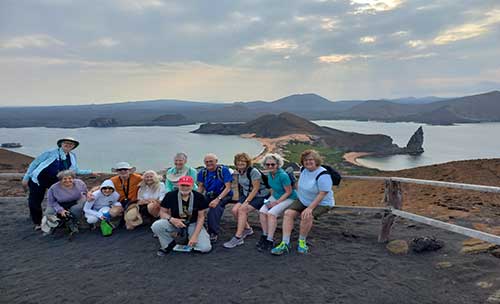
Bartolome is one of the most iconic places in the Galapagos and one of the few where you can see penguins without going to the remote areas of western Isabela and Fernandina. You will get great views of Pinnacle Rock, located in the northern side of the island, right next to a beautiful peach-color sand beach.
The hike to the top of the island is fantastic and will offer you incredible views of lunar landscapes with scattered volcanic cones. Many islands are visible from this outlook, as well as the bay of Sullivan and the Pinnacle rock.
Day 3
EL BARRANCO
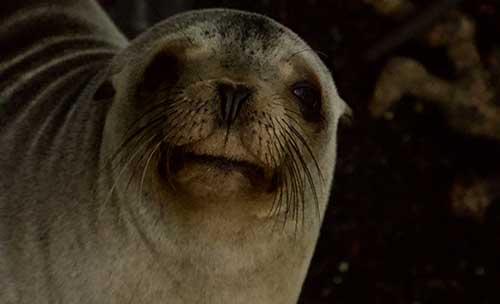
El Barranco is located in the southern part of Darwin Bay at Genovesa Island. The cliffs face the sea are made of very fragile fractured lava, making it the ideal place for storm petrel to build their colonies, which attracts an important population of short-eared owls preying of the nesting birds. Red footed and Nazca boobies are abundant along the trail. At the base of the cliffs you can see Galapagos fur seals resting in shaded areas, as well as several species of seabirds.
DARWIN BAY
Genovesa is a favorite island for birdwatchers as it is home for very large colonies of seabirds. From the minute you set foot at the beach you will be amazed by the noise of hundreds of boobies, gulls and frigatebirds flying over your heads, perched in the bushes or nesting on the sandy terrain. The trail is an ultimate wildlife experience as there are animals everywhere; sea lions and marine iguanas near the sea; night herons, lava & swallow tailed gulls, Darwin finches, Galapagos doves, mockingbirds and many more species inland.
Day 4
INTERPRETATION CENTER
Located in the outskirts of Puerto Baquerizo, this center is dedicated to the history of human presence in the Galapagos. Since the times of the early Spanish explorers to the present times, including illustrious visitors such as Charles Darwin, this permanent exhibition will take you through the dangers and struggles of the first settlers trying to survive the harsh Galapagos environment.