YACHT ISABELA II
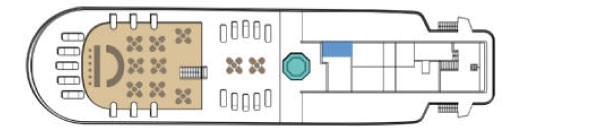
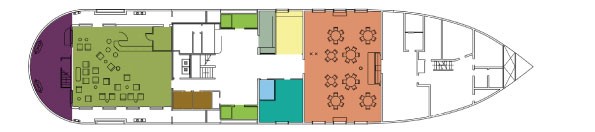
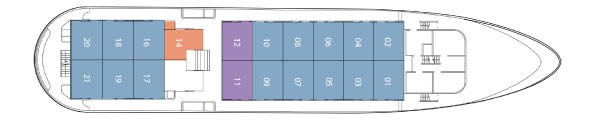
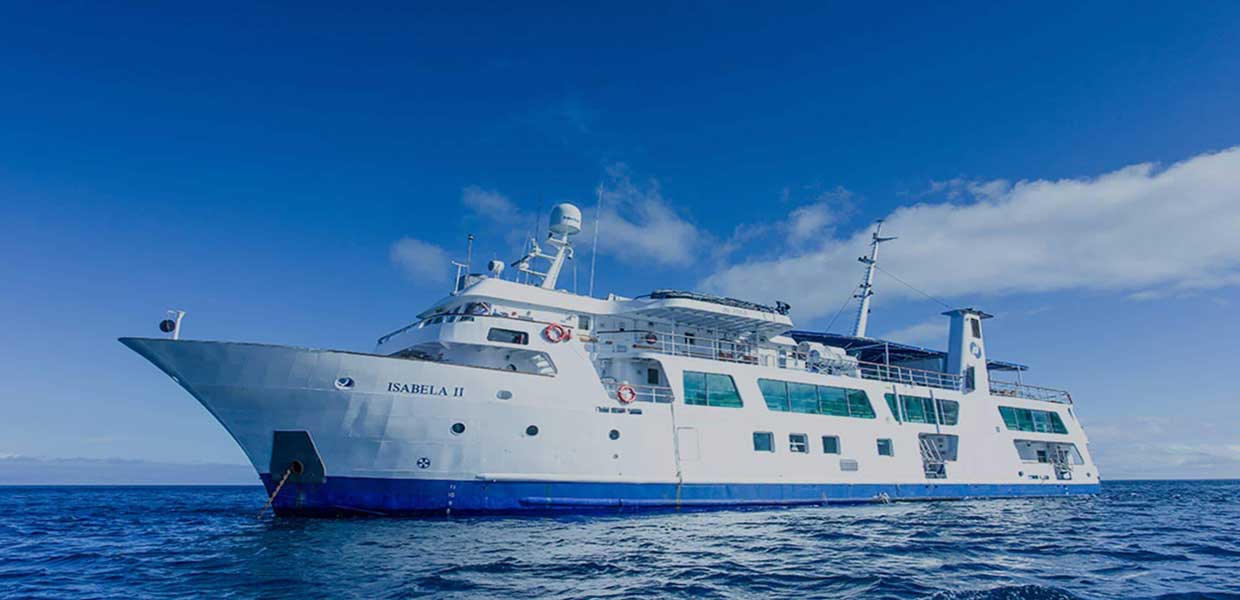
Yacht Isabela II is ideally-designed for Galapagos expedition cruising. It offers handsome installations to perfectly complement the day’s outings, providing guests with the perfect, intimate space for exploring Darwin’s islands in absolute comfort. Traditionalists will enjoy feeling at home with a crew that has remained almost unchanged for years, leading to seamless attention to detail that will make the entire journey feel extra special.
Additionally, Yacht Isabela II recently (mid-2018) underwent a complete and drastic renovation process that saw its interior and exterior areas completely refreshed and updated.
TECHNICAL SPECIFICATIONS |
|
SECURITY EQUIPMENT |
Gyrocompass, Automatic Pilot, radar. Safety Certificates: SOLAS 74 – ISM and ISPS – MARPOL. Fire Detector: Automatic with control from the bridge. Life Jackets: In each cabin Lifeboats: 2 units semi enclosed/capacity for 27 piers each. Life Rafts: Two 20-man, one 25-man |
5 Days Western GalapagosDay 1
Baltra Airport (Santa Cruz Island)
After landing at Baltra Airport, we drive to the Itabaca Channel to take a ferry across to Santa Cruz Island. A 30-minute bus ride takes us to a restaurant in the fascinating, more humid Highlands of the island to enjoy lunch, and then continue south down to Puerto Ayora on the coast.
Puerto Ayora and the Charles Darwin Research Station
At the eastern end of Puerto Ayora, the largest town in the archipelago, we visit the Charles Darwin Research Station and the Giant Tortoise Breeding Center, the islands’ headquarters for scientific research and conservation. Later in the afternoon, we stroll along the main street of Puerto Ayora before embarking. Captain’s welcome cocktail and dinner.
Day 2
Bartolome Island
This morning, a Galapagos icon awaits: Bartolome Island. A great way to start the day, with a steep climb up a wooden staircase: the panoramic view from the top is well worth the effort! Following the walk, we take a panga ride around colossal Pinnacle Rock in search of Galapagos penguins and other wildlife.
Sullivan Bay (Santiago Island)
After lunch, we board the pangas (inflatable dinghies) and land at Sullivan Bay on the east coast of Santiago, a white coral sand beach that is ideal for swimming. A trail runs along a lava field that flowed here around 100 years ago. This is the perfect place to see and understand the volcanic origin of the Galapagos.
Day 3
Dragon Hill (Santa Cruz Island)
The north coast of Santa Cruz hosts the fascinating landscapes of Dragon Hill. After disembarking, the first part of our walk passes a brackish-water lagoon frequented by shorebirds, ducks, and American flamingos, while further inland, the trail offers a beautiful view of the bay and the western islands of the archipelago, as well as the chance of observing land iguanas (for which the visitor site is named, following a concerted effort to conserve them by the Galapagos National Park). After our walk, we can snorkel from the shore. Here, we may spot rays, green turtles, and sharks.
Buccaneer Cove (Santiago Island)
After lunch, we explore the coastline along the impressive cliffs of Buccaneer Cove, learning about the area’s distant and recent history. The cove is home to a large number of marine birds, sea lions, and inter-tidal organisms. Enjoy fantastic natural formations such as “Elephant Rock”, “The Bishop”, and an impressive natural cave. Opportunities for snorkeling, panga, and glass-bottom boat rides are available.
Day 4
Punta Vicente Roca (Isabela Island)
Since there is no landing site at this location, we explore the captivating coast by dinghy, seeking out abundant wildlife including colonies of Galapagos fur seals, the nesting sites of Nazca boobies, not to mention flightless cormorants, penguins, and marine iguanas. Depending on the conditions of the ocean, we’ll be able to snorkel along the cliffs, hopefully in the company of green sea turtles. Back on board, we navigate along the Bolivar Channel, where nutrient-rich upwellings provide fertile fishing grounds for cetaceans.
Punta Espinoza (Fernandina Island)
We end our journey on a high note, by visiting the island of Fernandina, the youngest island of the archipelago and arguably one of the most pristine ecosystems on the planet. Our visitor site of Punta Espinoza boasts an amazing combination of apparently barren landscapes and abundant wildlife, all dominated by the lofty volcano at the heart of the island. Highlights to spot include hawks, penguins, huge numbers of marine iguanas, and the famous flightless cormorant, with its beguiling blue eyes.
Day 5
Baltra Island
Our journey ends at Baltra Island where we transfer to the airport to take the flight back to the mainland.
5 Days Northern Galapagos
Day 1
Baltra Airport and Santa Cruz Island
After landing at Baltra Airport, we drive to the Itabaca Channel to take a ferry across to Santa Cruz Island. A 30-minute bus ride takes us up to the fascinating, more humid Highlands of the island where we’ll learn about its unique ecosystems and biodiversity. Lunch is served at a local restaurant.
Highlands of Santa Cruz Island
After lunch, we drive to a nearby reserve that is one of the best places in the archipelago to see giant tortoises in their natural habitat. The tortoises are easy to spot, lumbering around, munching on grass and leaves and wallowing in small pools. There are several lava tunnels to explore in the reserve, too. A short bus ride takes us down to Puerto Ayora to board Yacht Isabela II.
Day 2
Puerto Egas (Santiago Island)
Following a wet landing on a black, sandy beach, our trail takes us to enjoy close-up encounters with recently reintroduced land iguanas, plus land and marine birds amid a landscape of tuff-stone layers, craggy rocks, and lava flows. At low tide, marine iguanas graze upon the algae beds. We can also observe a colony of fur seals, usually dozing in the shade of some rocks.
Chinese Hat Islet
This islet, formed only fairly recently, makes for a beautiful afternoon visit as we explore the wildlife along its 1,312 ft-long (400 m-long) trail, which begins at a crescent-shaped, white sandy beach. The cove offers excellent swimming and snorkeling opportunities amid white-tipped reef sharks and Galapagos penguins.
Day 3
Prince Philip’s Steps (Genovesa Island)
The day kicks off with a panga ride along the cliffs of “Bird Island”, as Genovesa is affectionately nicknamed, followed by a landing at a steep staircase which connects us with a flat plateau. From here the trail winds its way through large colonies of Nazca boobies, red-footed boobies, great frigatebirds, and storm petrels. With luck, we’ll be able to spot the short-eared owl. Those who do not wish to disembark can enjoy a longer panga (inflatable dinghy) ride along the cliffs, weather conditions permitting. Snorkeling and kayaking activities are available.
Darwin Bay (Genovesa Island)
We land after lunch at the beautiful white beach of Darwin Bay. Here we walk amid literally hundreds of birds, most of which are frigatebirds, red-footed and Nazca boobies, as well as gulls, herons, finches, and mockingbirds.
Day 4
Santa Fe Island
We take the dinghy over to this idyllic sandy-white beach populated by colonies of sea lions. Galapagos hawks are often easily observed, perched atop salt bushes. The Santa Fe land iguana may be spotted during our exploration. Following the walk, we can snorkel and swim along a natural wave barrier or ride the glass-bottom boat.
South Plaza Island
Following lunch and a rest, we disembark (dry landing) in this channel, whose turquoise waters contrast brilliantly with the white sand and black lava of the shoreline. Beyond, a carpet of scarlet sesuvium succulents serves as groundcover for a grove of luminescent green prickly-pear cactus. Yellow-grey land iguanas sit beneath these, waiting patiently for pears to drop. Along the coastline we find sea lion colonies, while frigates, swallow-tailed gulls and shearwaters glide, playing with the thermals
Day 5
Santa Fe Island
We take the dinghy over to this idyllic sandy-white beach populated by colonies of sea lions. Galapagos hawks are often easily observed, perched atop salt bushes. The Santa Fe land iguana may be spotted during our exploration. Following the walk, we can snorkel and swim along a natural wave barrier or ride the glass-bottom boat.
South Plaza Island
Following lunch and a rest, we disembark (dry landing) in this channel, whose turquoise waters contrast brilliantly with the white sand and black lava of the shoreline. Beyond, a carpet of scarlet sesuvium succulents serves as groundcover for a grove of luminescent green prickly-pear cactus. Yellow-grey land iguanas sit beneath these, waiting patiently for pears to drop. Along the coastline we find sea lion colonies, while frigates, swallow-tailed gulls and shearwaters glide, playing with the thermals.
Day 6
Baltra Island
Our journey ends at Baltra Island where we transfer to the airport to take the flight back to the mainland.